By Luca Gaspari, Research Assistant
Innovation’s growing role in Latin America
Across Latin America, public design has become a familiar force. The rise of innovation laboratories, the digitalization of public services, and the creative inclusion of citizens have opened paths toward more responsive and collaborative governance. These developments mark a shift for governments seeking to rebuild trust through openness and participation. Yet institutional learning has not kept pace with creative practice. As pilot projects close and administrative priorities shift, much of this work risks being forgotten. For innovation to reach its full potential as a public practice, its success depends on not only outcomes but on its capacity to sustain institutional memory.
The Problem
Latin America is urbanizing faster than any other region on Earth. Over 80% of its population now lives in cities, which is double the density of Europe and quadruple that of North America. (Oliván, 2018). This transformation is shadowed by informality, with between 20% and 30% of residents living in informal settlements. In such contexts, public innovation isn’t a luxury but a condition for survival. When traditional systems cannot meet basic needs, creative public solutions determine whether residents can access fundamental rights.
At the same time, regional institutions warn that three in four citizens across Latin America don’t trust their governments (OECD, CAF, & CEPAL, 2018). This erosion of trust mirrors what Acemoglu and Robison (2012) describe in their book Why Nations Fail (Por qué fracasan los países, 2012): prosperity depends less on geography or culture than on the nature of institutions—whether they are inclusive, sharing power and opportunity widely, or extractive, concentrating control within a narrow elite. Extractive systems can generate bursts of growth, but if bureaucracies resist innovation that threatens their dominance, progress soon stalls.
Documentation offers a counterweight to this tendency, turning experimentation into continuity and recording design activities directly into the institutional fabric of governance. Across Latin America, selective examples of good documentation practices show how even modest reporting efforts can strengthen continuity, helping innovation endure beyond individual projects or political cycles.
Acts of Documentation
From 700 academic and institutional publications reviewed on Latin American design and innovation initiatives, 85 final sources stand out for how intentionally they record and share their work. These cases illustrate distinct “good practices” in preserving institutional memory: consistent naming conventions, mapping relationships, methodological transparency, and temporal continuity. Each represents a different way that documentation reinforces collective learning and connects isolated efforts across the region.
Naming as Memory
The simplest form of documentation begins with naming. Brazil’s innovation ecosystem demonstrates an unusual coherence in this respect. Most innovation units, from Laboratório de Gestão da Inovação in São Paulo’s Judiciary to Laboratório de Inovação e Estratégia em Governo at the University of Brasília, follow a consistent “Laboratório de…” structure. This uniformity allows labs to recognize one another, cite each other, and build collective identity within the ecosystem.
In Brazil, naming operates simultaneously as a linguistic pattern and a tool for institutional coordination. The scholarly distinction between Laboratórios de Inovação Governamental (LIGs) and Laboratórios de Inovação Social (SI-Labs) reflects an intentional classification that links language to function. LIGs, situated within public administrations, focus on improving internal management, testing services, and embedding experimentation into bureaucratic culture. SI-Labs, by contrast, orient themselves toward social innovation–convening actors from civil society, universities, and the private sector to co-create solutions for issues such as housing and education (Olavo, Beneyto, Nebot, & Emmendoerfer, 2022). Together, these frameworks give Brazil’s landscape innovation an unusual degree of conceptual clarity. By naming and differentiating the spaces where innovation occurs, Brazil has built a taxonomy of public experimentation that reinforces coherence across scales of government.
Elsewhere in Latin America, similar efforts often emerge without shared conventions. Mexico’s Laboratorio Nacional de Política Pública (LNPP) omits the “lab” identifier in their abbreviations, complicating discoverability. Others, like Colombia’s Equipo de Innovación Pública, perform similar functions without using the “lab” label at all. Cases such as i9.JFRN in Rio Grande do Norte go even further, adopting creative branding that resists easy indexing or translation. Without shared conventions, even well-documented initiatives risk isolation within their own institutional vocabularies.
Innovation thrives on novelty and adaptation, but without consistent naming and archiving, that same creativity erases its own lineage. Consistent terminology keeps initiatives visible over time, makes cross-country comparisons possible, and allows projects to be rediscovered after websites or administrations change. In that sense, Brazil’s clarity isn’t just stylistic, it’s a form of institutional design that binds innovation to language and ensures collective memory.
Mapping Relationships
Most innovation work in government happens not within a single institution, but between them. Projects depend on coordination across ministries, municipalities, and agencies, yet these relationships often go undocumented. When reports fail to visualize how actors fund, support, and evaluate, the innovation ecosystem appears fragmented. Mapping relationships therefore becomes an essential act of documentation, transforming dispersed efforts into a legible system of sustained collaboration.
A particularly strong example comes from Silva Junior and Emmendoerfer (2023), whose comparative table (figure 1) of South American innovation labs systematically traces each lab’s institutional ties, orientation, and focus. By aligning each lab with its parent agency–whether national ministry or municipal office–the table turns what could otherwise be isolated cases into a networked view of governance. Readers can immediately see how Brazil’s LAB.ges connects to a shared secretariat, how Colombia’s EiP sits within the national planning department, or how Uruguay’s MvdLab links directly to the city’s participation office. This clarity reveals the connective tissue linking administrative and political relationships, illuminating how authority and collaboration circulate across institutions.
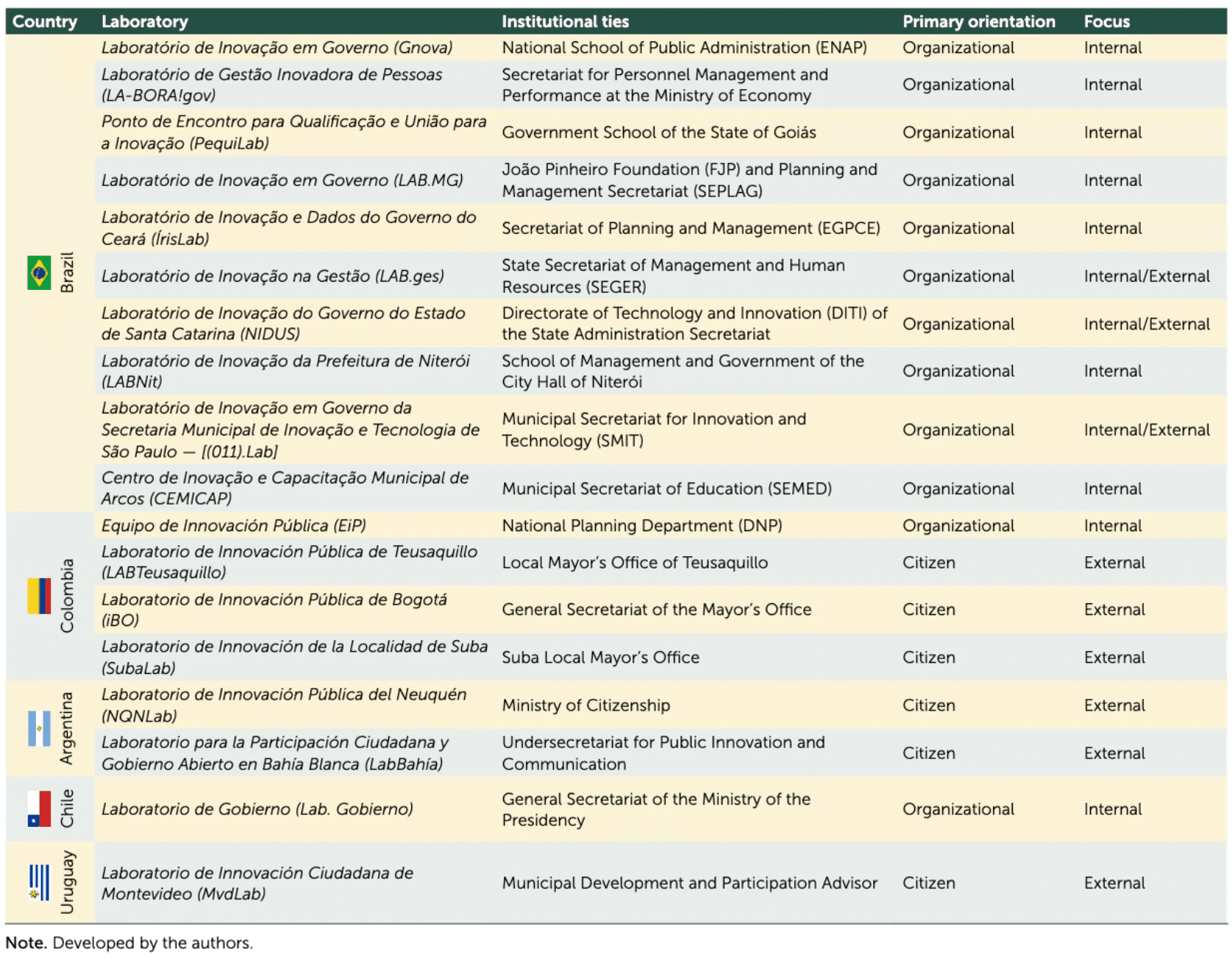
Figure 1: Comparative table of South American innovation labs from Silva Junior and Emmendoerfer (2023)
Another compelling example of relational documentation appears in Silva-Junior’s (2022) master’s dissertation, which maps how public innovation laboratories in South America relate across space, institution, and time. As shown in figure 2, his study visualizes the geographic distribution of labs, distinguishing between active, inactive, and unverified initiatives.
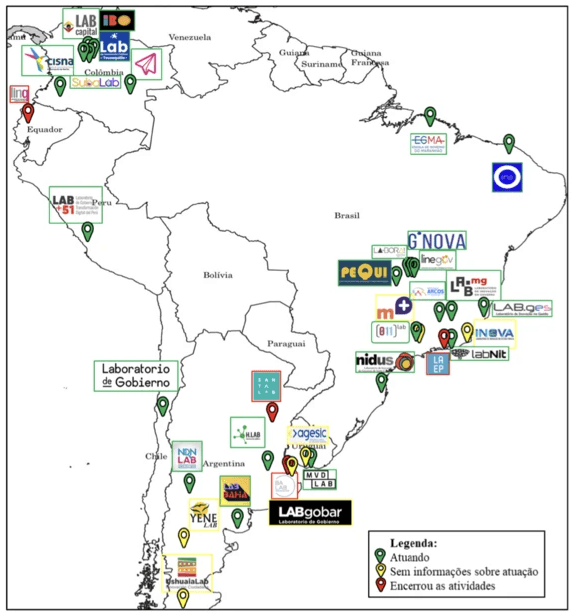
Figure 2: Distribution of innovation labs in South America (Silva-Junior, 2022)
The accompanying analysis lists both the labs included in the study and those excluded for inactivity, revealing the field through what endures and what has disappeared. By acknowledging discontinuity as part of the record, Silva-Junior reframes mapping as a diagnostic practice—one that exposes the volatility of the regional innovation landscape and the uneven continuity of experimentation across countries.
Further, the dissertation categorizes the active labs by level of intervention, institutional affiliation, and primary orientation, creating a structured view of how innovation units operate within national, regional, and municipal hierarchies. Each case identifies its hosting institution and focus ranging from digital government to citizen participation, making visible how labs differ in mandate yet remain interconnected through shared public objectives. This synthesis turns dispersed data into an ecosystemic view of governance, where relationships between institutions, agendas, and territories become legible. By combining spatial mapping with careful classification, Silva-Junior demonstrates how documentation itself can function as relational analysis, transforming inventory into insight and helping preserve institutional memory across cycles of emergence and decline.
Methods
Beyond mapping relationships, another key practice is methodological transparency. The most informative forms of documentation occur when methods are visible, and Chile’s Índice de Innovación Pública (IIP) exemplifies this approach with an explicit and repeatable evaluation framework. Developed by the Laboratorio de Gobierno with support from the Inter-American Development Bank, this index quantifies how innovative a public institution is across dimensions like institutional resources, processes, collaboration, and openness. Each participating agency receives a score out of 100 and a maturity label ranging from Inicial (emerging innovation capacity) to Modelo (fully institutionalized innovation practice). What makes this remarkable is not the metric but its continuity: by running the index in multiple cycles (2019-2021-2023), Chile has captured public innovation’s capacity growth over time (Contreras Villanueva, 2024).
An equally effective case of methodological reporting comes from GNova, Brazil’s federal public innovation lab housed within ENAP, the National School of Public Administration. In their publication Experimentação e novas possibilidades em governo (Ferrarezi, Lemos, & Brandalise, 2018), the lab documents ethnographic research on users of Brazil’s Unified Health System (SUS) through an Insights Map (figure 3) that translates qualitative observations into a visual narrative of barriers and opportunities. The figure traces the full patient journey from first contact to service delivery, highlighting administrative obstacles, citizen behaviors, and potential policy actions. By linking findings to design interventions, the map transforms field data into a shared framework for decision-making. This approach exemplifies how visualization can function as both a research method and a communication tool, turning complexity into clarity. In GNova’s work, documentation is not an outcome but a design act—one that preserves learning and makes institutional memory visible.
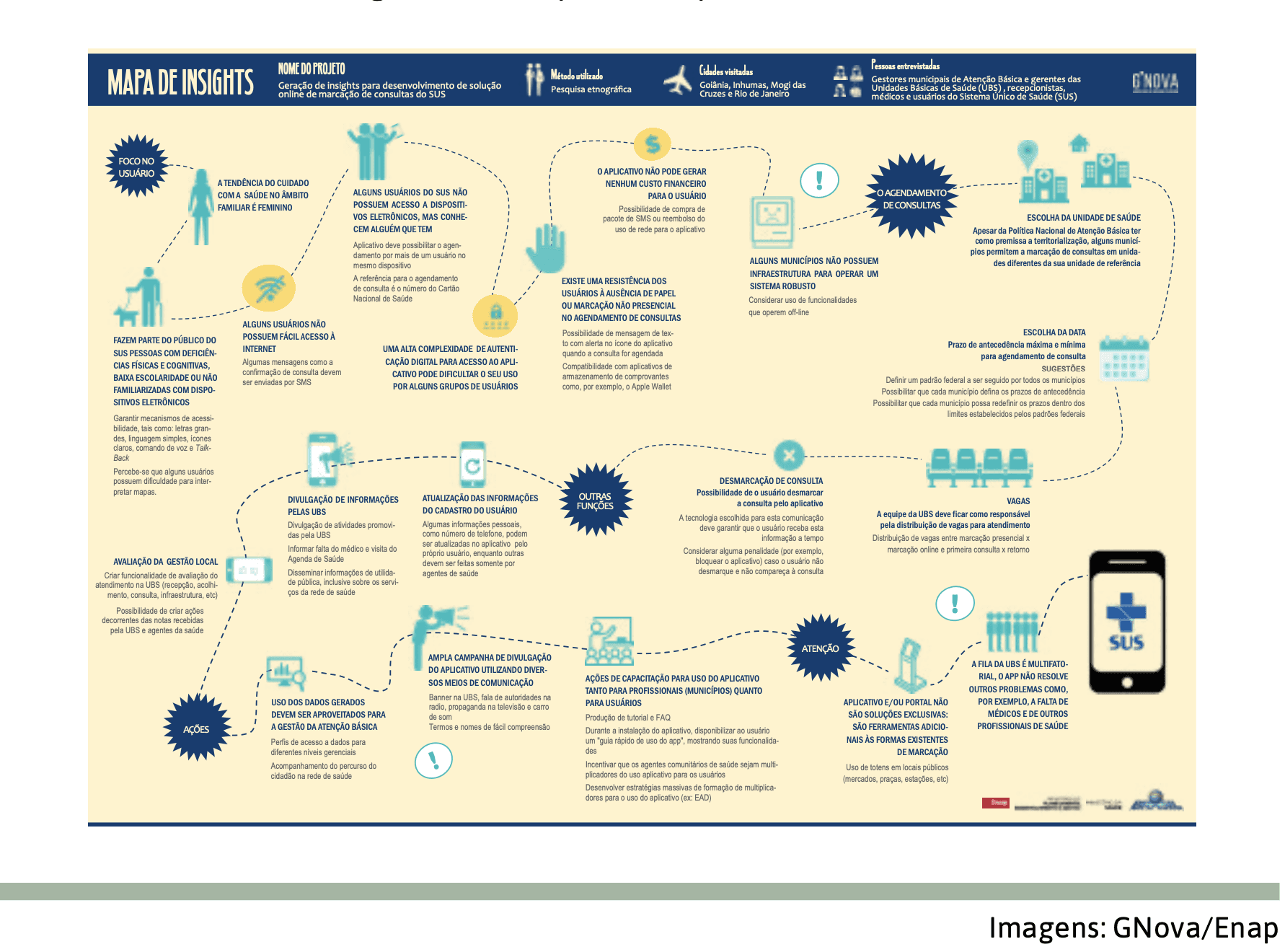
Figure 3: Insights Map from GNova (Ferrarezi, Lemos, & Brandalise, 2018)
A subsequent report by Long & NovaGob.Lab (2018) extends this transparency through an empirical survey of practitioners, identifying which methodologies are most familiar and frequently implemented in public innovation work. As shown in figure 4, the report provides a chart that makes innovation methods visible, it bridges methodological discourse with practice, translating frameworks into observable trends. The accompanying discussion notes that familiarity and practical application rates exceed 70 percent across most categories, evidence of a diverse but uneven methodological culture.
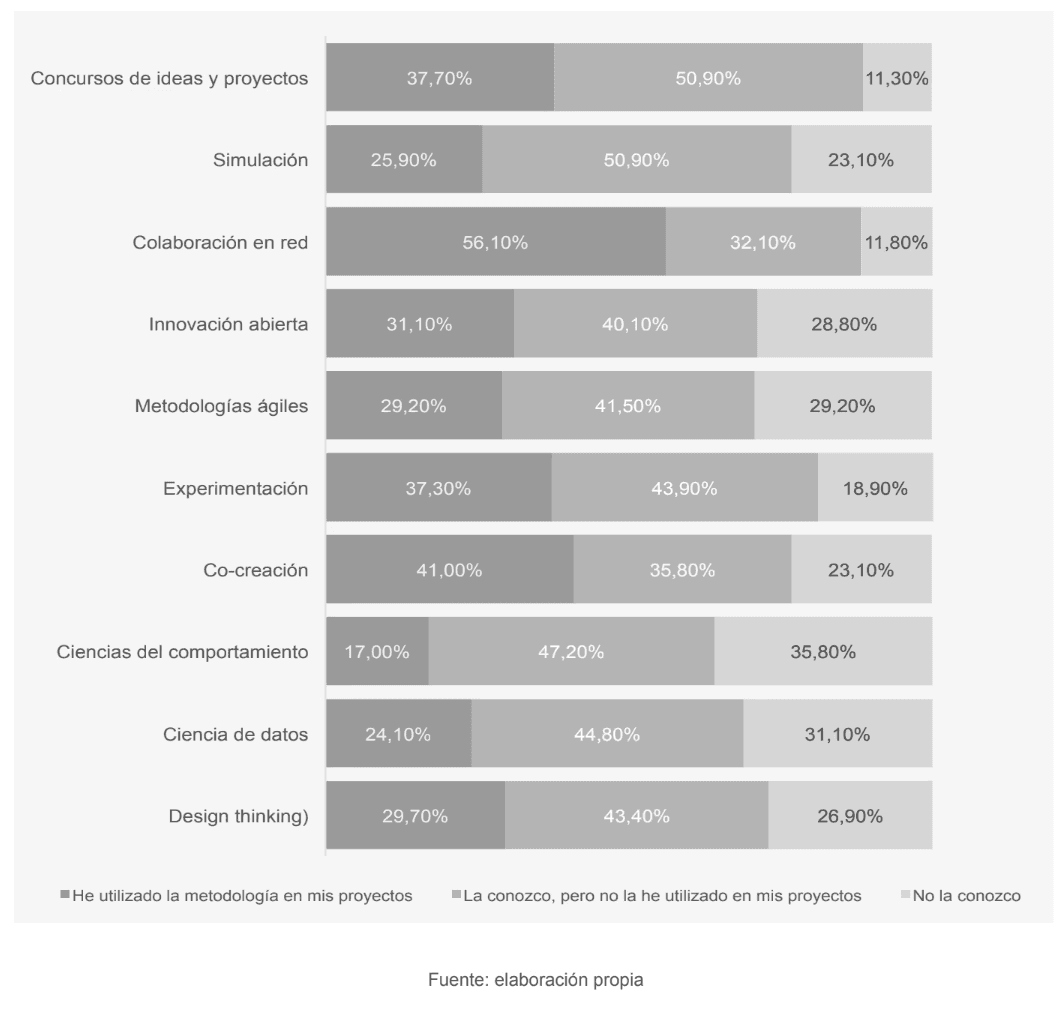
Figure 4: Chart of methodological familiarity among innovation practitioners from Long & NovaGob.Lab (2018)
Together, these examples illustrate how methodological transparency can itself serve as documentation. By mapping both the content and usage of innovation methods, the RedInnolabs publications transform dispersed practices into a shared framework. Even simple, well-structured descriptions, when consistent and comparative, become instruments of institutional memory, offering practitioners a common vocabulary and a tangible record of how innovation in government evolves over time.
Timelines that trace continuity
Time is the most fragile dimension in public work. Many labs appear and disappear within a single administration, and only a few sources manage to reconstruct their trajectories. Yet even simple visualizations can serve as anchors of institutional memory, transforming fleeting initiatives into a discernible narrative of progress.
The timeline from São Paulo’s (011).Lab offers a compelling example. As shown in figure 5, it condenses the lab’s evolution into a single linear chart, tracing its development from early 2017 through stages of research, prototyping, and consolidation. Drawn from Olavo (2018), the visualization turns organizational history into a story of continuity and learning. Such clarity connects individual projects through visible growth, allowing readers to grasp how innovation matures over time and how institutional change accumulates.
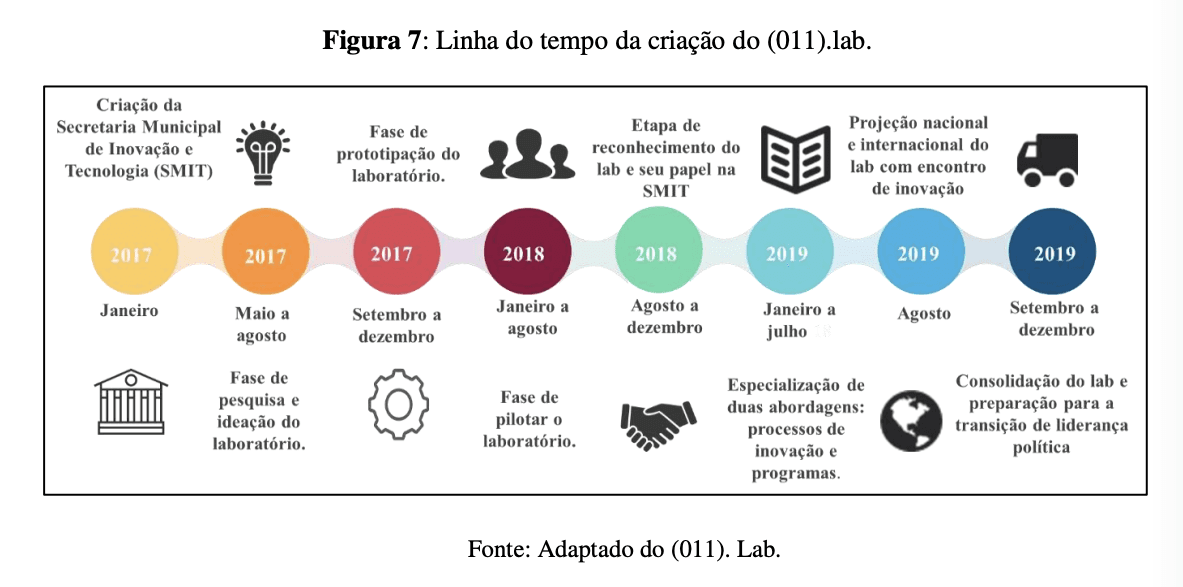
Figure 5: Timeline of São Paulo’s (011).Lab evolution from Olavo (2018)
More detailed examples go further, especially when they visualize continuity within a single institution. Ferrarezi, Lemos and Brandalise (2018) document two years of GNova’s evolution through a timeline that traces every experiment conducted between 2016 and 2018 (figure 6). Each project appears in sequence, showing partners, timeframes, and policy domains from early collaborations to the later expansion of education, health, and digital-governance initiatives. By mapping these milestones as a continuous flow, the figure turns dispersed projects into a coherent institutional narrative. This visualization demonstrates how systematic reporting can preserve organizational learning, giving temporal depth and purpose to experimentation in the public sector.
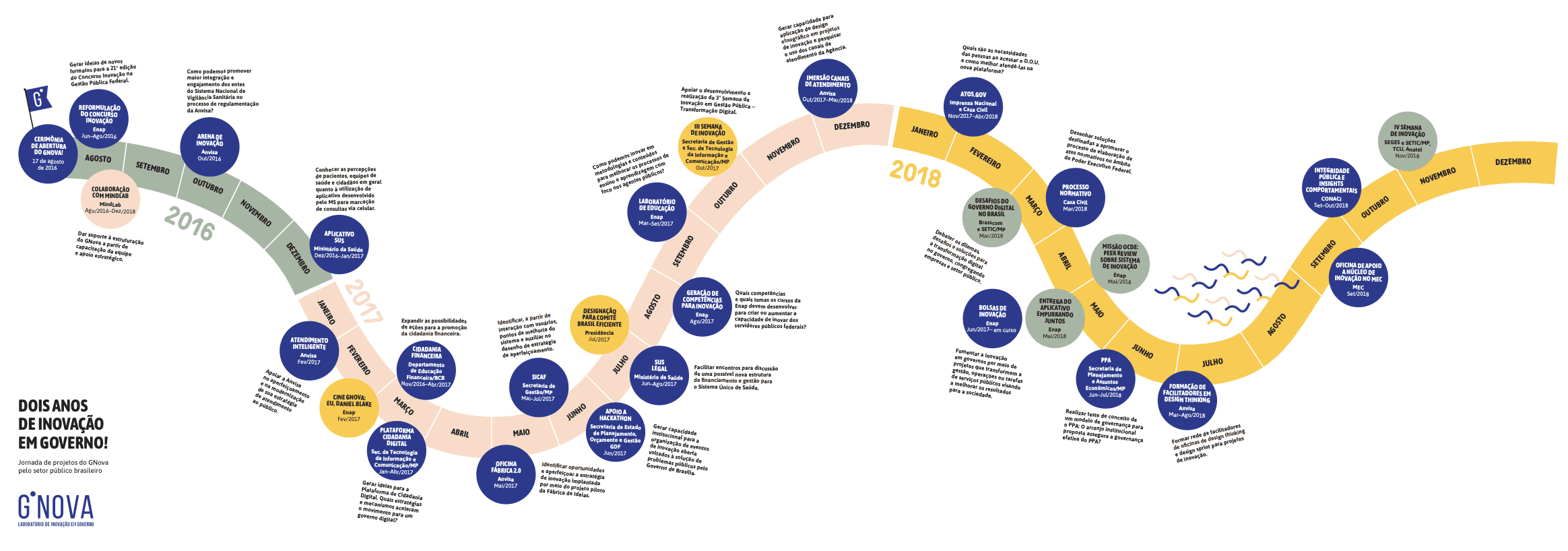
Figure 6: GNova project timeline from Ferrarezi, Lemos and Brandalise (2018)
A broader sense of temporal continuity emerges in LABIC, the regional network of itinerant citizen innovation labs created by the Ibero-American General Secretariat (Secretaría General Iberoamericana [SEGIB], 2018) in Madrid. Moving between Latin American cities, LABIC brings together public servants, civil society, and creative professionals to co-design solutions to shared challenges. Its editions, from Veracruz, Mexico in 2014 to Rosario, Argentina in 2018, document an evolving method that adapts to each local context while building on lessons from previous versions. Veracruz’s edition emphasized prototyping as a civic design method, while Nariño’s LABICxlaPaz embedded the lab within post-conflict territories, transforming collaboration itself into a form of peace-building.
This continuity across editions demonstrates how regional experimentation can institutionalize collective learning without a fixed structure. By describing handoffs and how each version led to the next, LABIC provides a clear temporal narrative that reveals how innovation matures through iteration.
The value of remembering
Across these examples, one pattern stands out: strong documentation is not determined by volume, rather intentionality. Some authors describe context, and others visualize relationships or standardize vocabulary, but the most effective examples integrate these aspects into a coherent record of practice. When this is done, they form a modest but growing infrastructure of memory across Latin America’s public innovation field.
Innovation, by nature, is transitory; it emerges to solve immediate problems and spearhead social responsiveness. Prototypes and teams are temporary, so without documentation, each cycle starts from zero. But when labs record how they work, including timelines, methods, and actors involved, they build continuity where continuity is rare. In fragile bureaucracies, this is an act of resistance, pushing back against the erasure of political turnover to bring accountability to experimentation.
In this sense, strengthening Latin America’s documentation efforts is a design problem in itself. It requires rethinking how information is structured and shared and how institutions design the systems through which of their knowledge survives.
To build a resilient ecosystem of public design, documentation must be understood as part of the creative process. Every chart, interview, and timelines contributes to the collective intelligence of the field. Reports that effectively list their operations, both good and bad, are prototypes of institutional memory. Improvisation and experimentation are cornerstones of public innovation, but its future depends on how carefully results are tracked. Memory is a form of design, the quiet architecture that allows ideas to endure after their creators have moved on.
REFERENCES
Acemoglu, D., & Robinson, J. A. (2012). Por qué fracasan los países: Los orígenes del poder, la prosperidad y la pobreza [Why nations fail: The origins of power, prosperity, and poverty]. Asociación Mexicana de Agentes de Seguros y Fianzas A.C. https://www.amasfac.info/boletines/anexos/LOS%20OR%C3%8DGENES%20DEL%20PODER%20PROSPERIDAD%20Y%20LA%20POBREZA.pdf
Christiansen, J., & Guillot Landecker, J. (2020). Una search-up gubernamental: La trayectoria del Equipo de Innovación Pública de Colombia. Departamento Nacional de Planeación.
Contreras Villanueva, R. (2024). ¿Cómo estamos midiendo la innovación en el Estado?: Una evaluación al Índice de Innovación Pública del Laboratorio de Gobierno. Universidad de Chile.
Hermosilla Varela, D. I. (2020). Factores que inciden en el desarrollo de proyectos de innovación pública: Un estudio de caso del programa Experimenta de Laboratorio de Gobierno. Universidad de Chile.
Ferrarezi, E., Lemos, J., & Brandalise, I. (2018). Experimentação e novas possibilidades em governo: aprendizados de um laboratório de inovação. Enap.
Long, F., & NovaGob.Lab. (2018). Laboratorios de gobierno para la innovación y burocracias públicas: Conocimiento mutuo e interacción para transformar la gestión pública. RedInnolabs.
Oliván, R. (2018). Abrir instituciones desde dentro [Hacking Inside Black Book]. Laboratorio de Aragón Gobierno Abierto.
Olavo, A. V. A., Beneyto, G. P., Nebot, C. P., & Emmendoerfer, M. L. (2022). Laboratórios de inovação no setor público em perspectiva comparada: Uma análise exploratória entre Brasil e Espanha. Revista de Gestão e Projetos (GeP), 13(2), 89–115. https://doi.org/10.5585/gep.v13i2.21972
Organisation for Economic Co-operation and Development, Comisión Económica para América Latina y el Caribe, & CAF – Banco de Desarrollo de América Latina. (2018). Perspectivas económicas de América Latina 2018: Repensando las instituciones para el desarrollo (Serie Perspectivas económicas de América Latina). OCDE/CAF/CEPAL. https://repositorio.cepal.org/server/api/core/bitstreams/593b54ce-d17d-4c38-a558-ae974b145e4f/content
Ramírez Peña, L. G. (2022). Laboratorios de Innovación Pública como espacios generadores de valor público en México. Universidad Autónoma del Estado de México.
Sano, H. (2020). Laboratórios de Inovação no Setor Público: Mapeamento e diagnóstico de experiências nacionais. ENAP.
Secretaría General Iberoamericana (SEGIB). (2018). Pensamiento Iberoamericano, 3.ª época, n.º 2: “Una Iberoamérica próspera, inclusiva y sostenible.” SEGIB.
Silva Junior, A. C., & Emmendoerfer, M. L. (2023). Innovation labs in South American governments: Congruencies and peculiarities. BAR – Brazilian Administration Review, 20(4), e220173.https://doi.org/10.1590/1807-7692bar2023220173
Silva-Junior, A. C. (2022). Comportamento intraempreendedor e abordagens de inovação no setor público: um estudo a partir de laboratórios de inovação em governo na América do Sul (Dissertação de Mestrado). Universidade Federal de Viçosa.